
Your Thoughts – Are They Consuming You?

On the left, is a picture of your brain. On the right is a picture of a computer hard drive. They both have something very important in common, and it’s not what you think. But before I go there, let me say this: Whatever consumes your thoughts, will control you. The mind, can be, a scary place. But it doesn’t have to be. Thoughts can act like a runaway train with no brakes. And like that train, they can wreck you, if you let them. So if you feel like this is you, that some category of thought is consuming you, there are things you can do starting now, to fix it.
121 down, 430 words to go... Continue Reading »
Pandemic Profits
Looking for the video? It's here: Pandemic Profits (YouTube)
[Soapbox Rant Warning] The US has 4.2% of world population, but 16% of the covid deaths. The numbers alone suggest our response to covid, was not just wrong – but more along the lines of abysmal, if not criminal. India and Africa suffered far less deaths than we did by 7x and 15x respectively. They outperformed us by a long shot. Given our covid performance as a country was among the worst in the world, shouldn’t we ask, what exactly was our covid strategy?
93 down, 766 words to go... Continue Reading »
The Indescribable Sound of Christian Music
You've probably been there - channel surfing on the radio, landing on a station and within a fraction of a second, you know you've landed on a Christian song. It's that indescribable sound that tells you with 100% confidence, this song is definitely Christian. You don't even have to hear a single lyric. Just hearing a half second of any part of the song screams from the highest mountain tops, Christian Contemporary Music (CCM) is hard at work. Or is it?
Let me ask you a question. Does Christian music suck? See, much of the world believes it does. We know this because they are voting with their dollar and their streaming playlists. If this is true, why is this? Why don't more people listen to Christian music? To get to the bottom of this, we need to understand why Christian music sounds the way it does.
145 down, 2124 words to go... Continue Reading »
Political Elections
Dear voter,
If your candidate didn't win, there is still much to be happy about. There are mass groups of people that lose their minds and come completely unglued when elections don't fall their way. Don't let the emotion from undesired outcomes put you in that fragile group of people.
49 down, 420 words to go... Continue Reading »
School Shootings, Walk Outs, and Gun Violence
On March 14th, thousands of students all over the country walked out of class for 17 minutes to protest gun violence in schools. It's certainly easy to empathize with this particular movement. They've had enough. We've all had enough. Everyone wants gun violence in schools eradicated. At the very least, everyone, including both sides of the isle, can get on this train.
61 down, 1452 words to go... Continue Reading »
Gun Control
Once again, the extremely predictable, semi-annual gun control debate is upon us... and just in time for the holiday season. Fact: each year there are about 11,000 deaths from homicide by firearms (“gun deaths”). This comes out to about 30 gun deaths each and every day. By contrast, there are about 1,060,000 abortions per year. This comes out to 2900 baby deaths per day (96 times more than gun deaths). Furthermore, Alzheimer’s kills 84,000 per year, the Flu kills 57,000 per year, suicide takes 41,000 per year, and Chronic Lower Respiratory Disease claims 149,000 per year. I know you saw that one coming.
103 down, 323 words to go... Continue Reading »
Dear Celebrity,
It seems there has been some recent confusion as to what we, the non-celebrity population of America, want from you. Whether you act on stage, on screen, or sing our favorite songs… there's really only one thing we want from you. What we want, and why you're paid, is because you entertain. It's show business. You put on the show, and we pay to see the show. In doing so, you provide brief moments of wonderful entertainment. And during those brief moments, we get to escape for that time, and enjoy your talent. We thank you for that.
98 down, 433 words to go... Continue Reading »
This is Why Tidal Will Fail
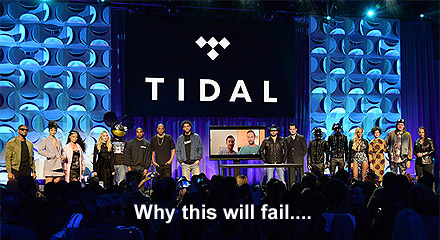
Update 4/21/2015: Tidal declared "Failure"
(less than a month after writing this).
My heart goes out to those select artists and celebrities who whine about not making enough money. Artists like Jay-Z, Madonna, Kanye, Rihanna, Beyonce, Alicia Keys, Chris Martin, and others backing the Tidal music streaming service... they are just scraping by aren't they? I mean, with pesky little net worths in the tens of millions, or even hundreds of millions, how do they get by? Bless their poor detached hearts.
89 down, 648 words to go... Continue Reading »
American Express Points Explained
 If you are wondering which Amex card to get to maximize your points usage, this guide is for you. For regular American Express cards like the Green, Gold, or Platinum Amex, your point conversions looks like this:
45 down, 282 words to go... Continue Reading »
The Internet's Fake Problem
You may not realize it, but many of the videos you share, quotes you forward, and news articles that win your click are fake. Why? Money of course.
Have you seen the plane at the airshow that landed with one wing? It's totally awesome. And it's totally fake. What about the eagle that swooped down and picked up the baby in the middle of the park and flew off before dropping the baby to the ground? Also fake. Have you seen David Beckham kick 3 soccer balls an impossible distance only to land directly into 3 trash cans on the beach? You guessed it, fake.
104 down, 750 words to go... Continue Reading »
Texas, Traffic, and Phones
Ahhh, the great state of Texas. Everything is bigger in Texas, right? Big cities, big hats, big hair - we Texans just love big. We have big cars and big trucks to get to our big stores and we drive big distances to go to big stadiums to watch big people play sports on big screens.
55 down, 947 words to go... Continue Reading »
What Little Girls Wish Daddies Knew
This is a snippet from an article that Tara Hedman, Registered Psychotherapist, wrote recently. Put simply, this is a very transparent list of what daddy's little girl wish her daddy knew. As a father of two girls, the weight of this text is quite pressing.
49 down, 528 words to go... Continue Reading »
Son of God Movie
The new movie about the life of Jesus Christ by Mark Burnett & Roma Downey hits theaters on Friday February 28th.
Go see this movie. On opening weekend. Make it happen.
33 down, 410 words to go... Continue Reading »
iPhone Won't Pair With Bluetooth?
Having trouble pairing your iPhone with your new Bluetooth device? Clock radios, wireless speakers, headsets, and several other devices made by iHome, Philips, Ion, Logitech and Sony may have trouble pairing the Bluetooth with your iPhone, but it's not necessarily the Bluetooth device's fault. The cause is probably on your iPhone.
51 down, 189 words to go... Continue Reading »
Tom Thumb Wine - Is it a Scam?
Tom Thumb's recent marketing campaign boasting you can, "Save 30% on bottles of wine priced $20 and over," sure sounds intriguing, but a quick visit to a store proves otherwise. This massive ad run by Tom Thumb is not only a scam, but it tells us that Tom Thumb must think their customers are as dumb as a box of rocks.
61 down, 299 words to go... Continue Reading »
Timeless Rock Playlist
- Slither - Velvet Revolver
- Show Me How to Live - Audio Slave
- Walk - Foo Fighters
- Kings and Queens - 30 Seconds to Mars
- Supermassive Black Hole - Muse
- Fuel - Metallica
- Cherub Rock - Smashing Pumpkins
- Dolphins Cry - Live
- Crawling in the Dark - Hoobastank
- Humans Being - Van Halen
42 down, 0 words to go... Continue Reading »
Best Bottle of Wine Under $10
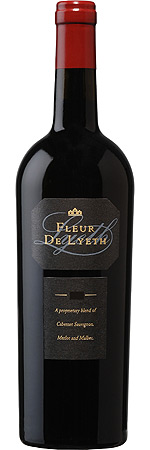
It's like the endless search that can't be finished. You think you've found it, but another year passes and that $9.75 bottle of wine that was so great last year just isn't the same this year. Years ago it was Veo Grande that made their mark on the under $10 category, but for whatever reason they couldn't keep the level of quality consistent year to year. So one year it tastes great, and next, well.. perhaps more like sand and water.
Hear me now, believe me later - this bottle continues to satisfy. Year after year, this proprietary red blend has kept the quality and the value pricing. Fleur De Lyeth is the best bottle of red wine under $10. I know some of you might argue shelf space hogs like Yellow Tail, a coastal Mondavi, Bogle, or what have you, but I would say different. While all those bottles have had their time in the spot light the quality consistency from year to year fluctuates like Texas weather. It just can't be trusted. And by no means am I dogging those other brands, but their entry level priced wine just isn't holding up right now.
You want to spend less than $10 on a bottle of red, and impress your company? Don't bother rolling the dice on several dozen bottles of junk in that $6 to $10 range. Just find the Fleur De Lyeth, and call it a win. You can't make nine dollars and change taste any better.
256 down, 0 words to go... Continue Reading »
History Channel, The Bible - Mark Burnett
If you aren't watching the new miniseries on The History Channel by Mark Burnett and his wife Roma Downey, it's not too late to start. And if you missed the first installment, set your DVR because they are re-airing it multiple times.
42 down, 344 words to go... Continue Reading »
Muse Concert in Dallas at AAC
# # # # # # # # # # # # #
Muse Review in Dallas on 12/2/2015 Here
# # # # # # # # # # # # #
Some pictures of Muse in Dallas @ AAC on March 13th, 2013.
42 down, 48 words to go... Continue Reading »
Who is to credit for building my business?
Government? Obama? Exactly who built whatever it is that I have?
I went to work for KPMG in the late 90s. I got the job there because my parents sent me to Baylor University after my lukewarm high school performance. I was a Sigma Nu at Baylor and there I met a friend named Jocelyn. She walked my resume in to KPMG and landed me the job after one 45 minute interview. I was trained in web technologies at Baylor, which ultimately got me hired at Scient, which I left KPMG for. My friend Chad called me from Scient and convinced me to leave KPMG. At Scient I learned the important stuff to all things internet and web.
117 down, 606 words to go... Continue Reading »